
Flat pack kitchens look like the smart choice on paper. Lower upfront cost. Quick delivery. You can even install them yourself if you have the tools and the patience. But the real question is not what a kitchen costs to buy. It is what a kitchen costs to own over 10 years.
When you compare a custom kitchen to a flat pack system on a decade timeline, the numbers shift. And they shift in a direction most people do not expect.
The Upfront Price Gap Is Real, But It Is Not the Full Picture
A flat pack kitchen from a major retailer can cost anywhere from $5,000 to $15,000 for a standard layout. A custom kitchen from a local joinery company typically starts around $20,000 and moves upward depending on size, materials, and complexity.
That gap looks significant at the point of purchase. But it narrows fast once you factor in what happens after installation.
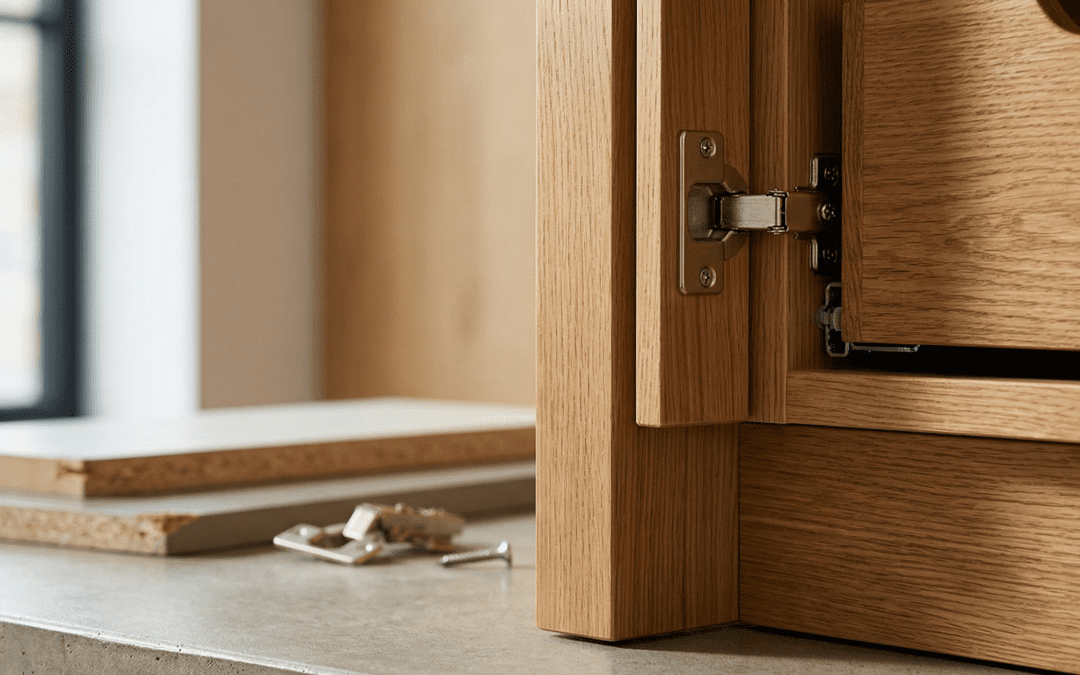
Flat pack kitchens use thinner carcass boards, lighter hardware, and doors that are designed for cost efficiency rather than longevity. The hinges open and close well for the first two years. By year three, they begin to loosen. By year five, several doors may not sit flush. Drawer runners lose tension. Laminate edges start peeling where moisture meets the board, especially near the sink and dishwasher.
Custom cabinetry built with quality materials and soft-close hardware does not follow that pattern. The components are rated for a much higher number of open and close cycles. The carcass board is thicker. The edge banding is applied under heat and pressure in a factory, not trimmed from a strip in a garage. The result is a kitchen that performs the same on year eight as it did on year one.
Replacement Costs Are Where Flat Pack Gets Expensive
Here is where the 10 year math gets interesting.
A flat pack kitchen installed today will likely need its first round of repairs within four to five years. Hinges replaced. Drawer runners swapped. A warped door or two exchanged. These repairs are small individually, but they add up. More importantly, finding replacement parts for a flat pack system from five years ago is not always straightforward. Product lines change. Sizes shift. Finishes get discontinued.
By year seven to eight, many flat pack kitchens need a full refit. Not because the layout is wrong, but because the materials have reached the end of their usable life. That second purchase puts the total spend closer to, or sometimes above, what a custom kitchen would have cost in the first place.
A well-built custom kitchen does not need replacing at year eight. It does not need a second round of hardware. It keeps working because it was built with that expectation from the start.
Fit and Finish: The Daily Cost You Feel But Cannot Measure
Flat pack systems come in standard sizes. Your kitchen does not. Every home has slightly different wall angles, floor levels, and ceiling heights. Standard cabinet widths do not always line up with the space available.
The result is filler panels. Gaps covered with trim. Overhead cabinets that stop short of the ceiling because the next size up would not fit. These compromises are cosmetic, but they affect how the kitchen feels every time you walk into it.
Custom cabinetry fits wall to wall. Every cabinet is built to the millimetre. There are no filler panels, no awkward gaps, and no wasted space above the overheads. This precision is not just visual. It also means more usable storage, which matters in the compact kitchens found across Gregory Hills, Oran Park, and Harrington Park where every centimetre counts.
Resale Value: What Buyers Actually Notice
If you plan to sell your home within the next decade, the kitchen will be one of the first things a buyer inspects. Real estate agents across South West Sydney consistently say that a well-presented kitchen is the single biggest factor in how quickly a home sells and at what price.
A flat pack kitchen that is showing its age does not help at the point of sale. Peeling edges, sagging drawers, and dated handles signal to a buyer that the house needs work. That perception lowers offers.
A custom kitchen in good condition signals the opposite. It tells buyers the home has been looked after and that the fit-out was done properly. Buyers in the Macarthur region, especially in newer estates, respond well to quality cabinetry because many of them already live with builder-grade kitchens and know the difference.
What About the DIY Installation Savings?
Flat pack kitchens are marketed as easy to install. Some people manage it well. But the process takes longer than most expect, and the risk of error is high.
Cabinets that are not level create problems that compound over time. Doors that are slightly misaligned put extra stress on hinges. Benchtops that are not properly supported can crack at the join. A professional installer catches these issues before they become problems. A weekend DIY job often does not.
Custom kitchens include professional installation as part of the package. At Cobbitty Grove, our installation team manages site protection, fitting, levelling, and final adjustments. The kitchen is built to fit the space, so the install goes smoothly and the result is tight, level, and functional from day one.
The 10 Year Comparison
Here is a simplified view of what the numbers look like over a decade.
A flat pack kitchen purchased for $10,000 with DIY installation, plus $2,000 in repair costs at year four, plus a full replacement at year eight for another $12,000, totals roughly $24,000 over 10 years. That is two kitchens for the price of one that did not last.
A custom kitchen purchased for $30,000 with professional design, manufacture, and installation, plus minimal maintenance costs over the same period, totals roughly $30,000 to $32,000. One kitchen. One install. Still working perfectly at year 10.
The upfront gap was $20,000. The 10 year gap is under $8,000. And the custom kitchen is still going.
Which One Is Right for You?
Flat pack has a place. If you are fitting out a rental property, staging a home for a quick sale, or working within an extremely tight budget on a temporary living situation, it does the job.
But if this is your family home, the one where you cook dinner every night, pack lunches every morning, and host birthdays on the weekend, the 10 year cost is what matters. And on that timeline, custom wins.
If you want to see the difference in person, book a visit to the Cobbitty Grove showroom in Smeaton Grange. Touch the hardware. Open the drawers. See what 40 years of joinery experience looks like up close.