
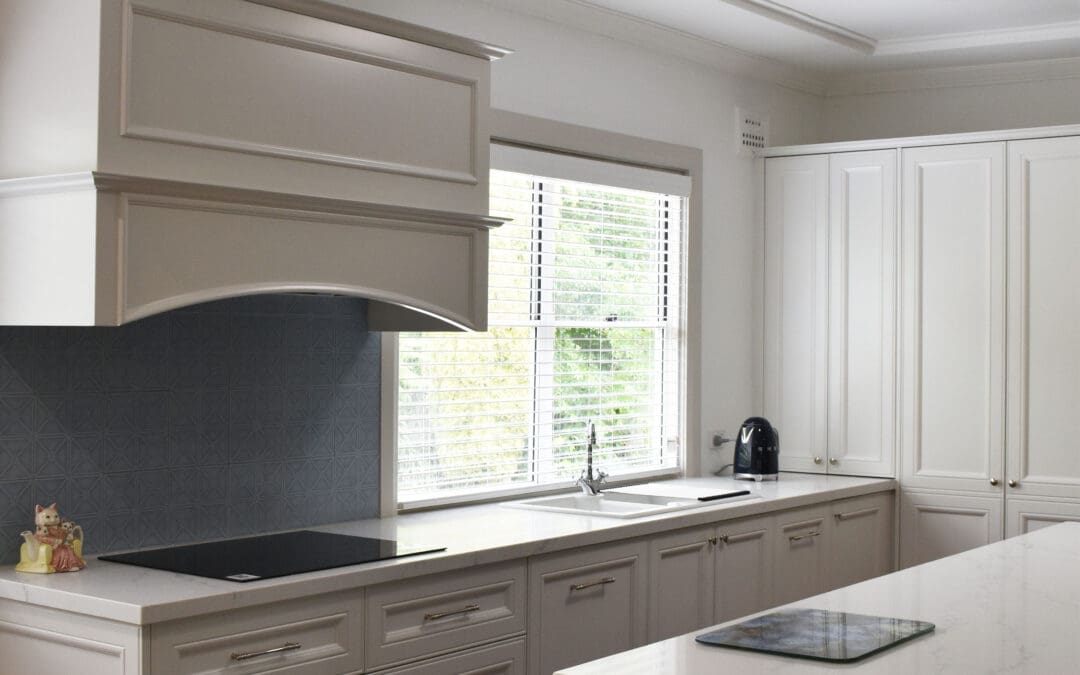
Every real estate agent in South West Sydney will tell you the same thing: the kitchen sells the house. It is the room buyers inspect first, judge hardest, and remember longest. A dated kitchen with peeling laminate and failing hardware drags the entire property down, even if the rest of the home is in good condition.
But how much value does a kitchen renovation actually add? And is the return the same in Gregory Hills as it is in Bowral or Campbelltown? The answer depends on what you spend, how the renovation compares to the surrounding market, and whether the quality matches buyer expectations.
Why Kitchens Drive Property Value in This Market
The suburbs across the Macarthur region, including Gregory Hills, Oran Park, Harrington Park, and Mount Annan, are filled with homes built between 2015 and 2022 by volume builders. These homes share similar floor plans, similar exteriors, and similar builder-grade kitchens.
When a buyer walks through five open homes in the same estate on a Saturday morning, the kitchens start to blur together. Standard laminate benchtops. White vinyl-wrapped doors. Chrome handles. A peninsula bench with a single overhead cupboard run. The houses that stand out are the ones where the owner upgraded the kitchen to something that looks and feels different from the builder standard.
In a market where most comparable homes have the same starting point, a renovated kitchen becomes a genuine differentiator. Buyers do not just see a nicer kitchen. They see a home that has been invested in, maintained, and improved. That perception shifts the offer price upward.
What Buyers in South West Sydney Actually Look For
Buyers in this market are not looking for magazine-cover kitchens with imported marble and gold tapware. They are looking for kitchens that solve the problems they already live with in their own home.
Stone benchtops are expected, not aspirational, in this price bracket. A kitchen with laminate benchtops in a home listed above $900,000 immediately signals to a buyer that the property has not been updated. It does not need to be the most expensive stone. It needs to be stone.
Soft close hardware is another baseline expectation. Buyers open every drawer and every cupboard during an inspection. If the drawers stick or the doors bounce when closed, it registers as a negative. Hardware quality is felt instantly and it forms an impression about the rest of the home.
Storage design matters more than most sellers realise. A well-organised pantry, pull-out drawers instead of fixed shelves, and integrated bins signal that the kitchen was designed with thought, not just installed to fill a space. Buyers with young families, which is the dominant demographic across these suburbs, respond strongly to functional storage because they are dealing with the same daily chaos in their current home.
Integrated appliances (dishwashers behind matching panels, built-in microwaves, concealed rangehoods) add a sense of completeness that off-the-shelf kitchens lack. They also reduce the visual clutter in an open plan space, which photographs better in listing images. And listing photos are where most buyer interest starts.
The Overcapitalisation Risk
Not every dollar spent on a kitchen comes back at sale. Overcapitalisation happens when the renovation exceeds what the local market will reward.
In suburbs where the median house price sits between $850,000 and $1,100,000, spending $60,000 on a kitchen is hard to recover in full. Buyers in that bracket expect a quality kitchen, but they are not willing to pay a $60,000 premium over a comparable home with a $30,000 kitchen.
The general rule in this market is to keep the kitchen renovation budget below 5 to 7 percent of the property’s expected sale price. On a home valued at $950,000, that puts the kitchen budget between $47,500 and $66,500. Spending within that range means the renovation adds value without tipping into territory the market will not support.
Where this calculation shifts is in the Southern Highlands. In suburbs like Bowral and Mittagong, where property values are higher and buyers expect heritage-sensitive finishes, a kitchen renovation budget of $50,000 to $80,000 is proportionate to the market and recoverable at sale.
How Presentation Multiplies the Renovation’s Impact
A renovated kitchen adds value. A renovated kitchen that photographs well adds more.
Real estate listings with professional photos of a quality kitchen generate significantly more clicks and inspection bookings than listings where the kitchen is a weak point. The kitchen is often the hero image in the listing, the first photo a buyer sees when scrolling.
Styling the kitchen for the listing (clearing benchtops, adding a few well-placed items, and making sure the lighting is on) takes 30 minutes and costs nothing. But it can be the difference between a buyer clicking through to book an inspection and scrolling past.
If you have invested in a custom kitchen with stone benchtops, quality cabinetry, and a clean layout, make sure the listing photos show it properly. That investment deserves to work hard for you at sale time.
Renovation Timing Relative to the Sale
The closer the renovation is to the sale date, the stronger the impact on buyer perception. A kitchen renovated within the last 12 months looks and feels new. A kitchen renovated five years ago, even a quality one, may have minor signs of use that dilute the “just renovated” effect.
If you are renovating specifically to sell, time the project so the kitchen is completed no more than three to six months before listing. That window gives you time to live in the kitchen (which reveals any snags that need fixing) while keeping the finish fresh for inspections.
If you are renovating for your own use and plan to sell later, the calculus is different. The value comes from years of daily enjoyment first, with resale as a secondary benefit. In that case, invest in quality materials and hardware that will still look and perform well in five to seven years.
What a Kitchen Renovation Actually Returns
It is difficult to put an exact dollar figure on return because every property, suburb, and market condition is different. But the pattern across the Macarthur region is consistent: a well-executed kitchen renovation on a volume-builder home typically shifts the sale price by more than the cost of the renovation, provided the spend is proportionate to the property value.
The return is strongest when the renovation addresses the most visible shortcomings of the original kitchen. Replacing laminate with stone, upgrading hardware, adding island seating, improving storage, and connecting the kitchen to the living area through better layout design all register with buyers in this market.
The return is weakest when the renovation is purely cosmetic (new doors on the same layout) or when it exceeds what the local market expects. Spending on features buyers in the area do not value (imported tile splashbacks, commercial-grade appliances, custom metalwork) may satisfy personal taste but will not translate to a proportionate price increase.
Plan the Renovation Around Value, Not Just Looks
Whether you are renovating to sell or renovating to stay, the smartest approach is to invest in the elements that deliver both daily function and long-term value. Quality cabinetry, durable benchtops, reliable hardware, and a layout that works for families will serve you well while you live in the home and reward you when you sell it.
If you want to understand how a kitchen renovation would affect your home’s value, talk to the Cobbitty Grove team. We work with families across Campbelltown, Camden, and the wider Macarthur region and can help you plan a renovation that fits your budget, your timeline, and your goals.